Level 2 EV Charger Installation (240V) service provided by licensed electricians in South Florida

Licensed Electrician • FL #EC13012419 • 24/7 Available

Level 2 EV Charger Installation

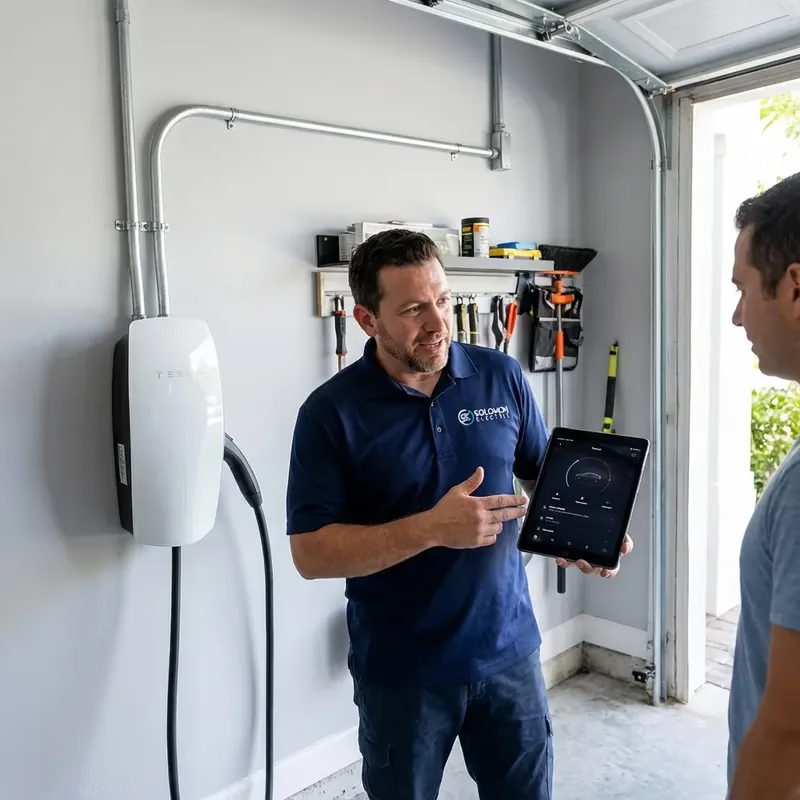
Still charging your EV from a standard 120V outlet? At 4-5 miles of range per hour, Level 1 charging can't keep up with daily driving. Level 2 charging delivers 25-30 miles per hour. Level 2 home charging provides the necessary 240V infrastructure for efficient electric vehicle replenishment. Solomon Electric's licensed team Miami performs professional installation of charging stations including Tesla Wall Connectors and universal J1772 systems, ensuring all circuitry meets high-amperage continuous load standards. Licensed FL electricians installing all major EV charger brands throughout South Florida.

Licensed FL EC13012419
24/7 Emergency Response
BBB A+ Accredited

What is Level 2 EV Charger Installation?

Level 2 EV Charger Installation is a professional electrical service that still charging your ev from a standard 120v outlet? at 4-5 miles of range per hour, level 1 charging can't keep up with daily driving. level 2 charging delivers 25-30 miles per hour. level 2 home charging provides the necessary 240v infrastructure for efficient electric vehicle replenishment. solomon electric's licensed team miami performs professional installation of charging stations including tesla wall connectors and universal j1772 systems, ensuring all circuitry meets high-amperage continuous load standards. licensed fl electricians installing all major ev charger brands throughout south florida. Our licensed electricians in Miami-Dade and Broward counties provide expert level 2 ev charger installation with guaranteed satisfaction.

Related:
electrical-panel-upgrade-100a-to-200a 240v-outlet-installation electric-vehicle-outlet-installation
240V Voltage Standard
NEC Code Compliant
0% Permit Success
Licensed Insured

How to Know You Need Professional Level 2 EV Charger Installation

Standard 120V household outlets are not designed for the continuous high-current demands of electric vehicle charging. A dedicated Level 2 system addresses these infrastructure requirements.

Extended Charging Intervals

Standard 120V outlets provide low-amperage charging that may be insufficient for daily transportation requirements in a regional metropolitan area.

Circuit Breaker Capacity

Charging an EV on a shared residential circuit can exceed the breaker's rated capacity, leading to frequent interruptions and thermal stress on wiring.

HOA and Regulatory Compliance

Condominium and homeowner associations have specific technical and insurance requirements for the installation of electrical equipment in common areas.

Thermal Stress on Receptacles

Standard outlets are not typically rated for high-current loads over multiple hours. Industrial-grade components are required to prevent heat-related failure.

Electrical Panel Constraints

If a panel has reached its maximum breaker capacity, structural solutions such as sub-panels or load-management devices are required for safe operation.

Non-Compliant Wiring Methods

Temporary extension cords or improper conduit runs create safety hazards and do not meet National Electrical Code requirements for permanent EVSE installations.

The Professional Level 2 EV Charger Installation Process

1

Electrical Load Analysis

A technician evaluates the property's total electrical footprint to determine the appropriate amperage for the charging station and circuit.

2

Administrative Documentation

The required technical drawings, insurance certificates, and license verifications are prepared for submission to HOA boards and property management.

3

Permit Acquisition

Electrical permits are obtained from the local building department to ensure the installation is documented and compliant with safety codes.

4

Structural Wiring

High-gauge copper conductors and dedicated overcurrent protection are installed, followed by a thermal test under operational load.

5

Equipment Integration

The charging station is mounted and hardwired, followed by a verification of communication between the vehicle and the charging hardware.

How Level 2 EV Charger Installation Improves Your Property

Standardized Charging Output

A dedicated Level 2 circuit provides a stable 240V output, aligning with the technical specifications of modern electric vehicle batteries.

Regulatory Alignment

Professional installation ensures all work meets Florida's specific electrical codes and property insurance requirements for home infrastructure.

System Scalability

Infrastructure can be designed to support dual-charging configurations for properties with multiple electric vehicles.

Environmental Durability

Outdoor components utilize UV-resistant materials and stainless steel hardware to withstand regional South Florida weather patterns.

Fast & Efficient Level 2 Home Charging in South Florida

Expert electrical services are provided for the installation of residential and commercial EV charging infrastructure throughout South Florida. Licensed technicians manage the requirements for Tesla and universal charging systems to ensure a safe and compliant integration. We evaluate your existing electrical panel capacity before any EV charger installation. If your panel can't support the additional 40-50 amp load, we'll recommend the most cost-effective upgrade path—whether that's a panel upgrade, load management device, or dedicated sub-panel.

Meeting South Florida Condominium & HOA EV Requirements

Specialized coordination is available to navigate the technical and administrative requirements for electric vehicle charging in multi-unit buildings. Professional engineering and permitting services are used to meet the standards of luxury property boards and municipal codes. South Florida's year-round warm climate is ideal for electric vehicles, but the heat also demands properly rated charging equipment and wiring. We use only wiring and components rated for the elevated temperatures inside Florida garages and carports.

Is Your South Florida Home Ready for an EV Charger?

A Level 2 charger transforms your garage or driveway into a convenient fueling station. Solomon Electric installs all major brands—Tesla Wall Connector, ChargePoint, JuiceBox, and more—with the dedicated 240V circuits and proper protection required by Florida code. We install all major EV charger brands and can advise on the best option for your vehicle. Whether you drive a Tesla, Ford, Rivian, or any other EV, we ensure your charging setup delivers maximum speed within your electrical capacity.

Planning Your EV Charging Circuit in South Florida

Before installation, our electricians verify your panel capacity, measure the circuit run distance, and confirm the charger location meets clearance requirements. If your panel needs an upgrade or a sub-panel, we handle that too—one contractor, one project, done right. Our installations include a dedicated circuit with proper wire sizing for the full length of the run, GFCI protection where required, and a weatherproof disconnect if the charger is outdoors. Every installation passes Miami-Dade County inspection the first time.

Complete Expert Guide

The Definitive Guide to Level 2 EV Charger Installation in South Florida

Written by licensed FL electricians with 18+ years of hands-on experience

Level 1 vs Level 2 EV Charging: Why the Upgrade Matters

Every electric vehicle comes with a Level 1 charger that plugs into a standard 120-volt household outlet. While convenient, Level 1 charging adds only 3-5 miles of range per hour of charging — meaning a full charge for a Tesla Model 3 with a depleted battery takes over 40 hours. For most EV owners, this is simply too slow for daily driving needs.

A Level 2 charger operates on 240 volts (the same voltage as your dryer or oven) and delivers 25-40 miles of range per hour, depending on the charger's amperage and your vehicle's onboard charger capacity. This means a typical daily commute can be fully recovered in 2-3 hours of overnight charging. For families with multiple EVs, a Level 2 charger is not optional — it is essential infrastructure.

The difference in your daily experience is transformative. Instead of anxiously monitoring your battery level, you simply plug in when you get home and wake up to a full charge every morning. It is the EV equivalent of always having a full tank of gas without ever visiting a gas station.

Electrical Requirements for Level 2 EV Charger Installation

Installing a Level 2 EV charger requires a dedicated 240-volt circuit from your electrical panel to the charging location. The circuit size depends on the charger you choose: a 32-amp charger (like the Tesla Wall Connector at its default setting) requires a minimum 40-amp circuit with 8-gauge wire; a 48-amp charger requires a 60-amp circuit with 6-gauge wire; and a 50-amp NEMA 14-50 outlet — the most versatile option — requires a 50-amp circuit.

Before installation, your electrician should perform an NEC load calculation on your existing panel to ensure it has sufficient capacity for the new circuit. Many South Florida homes with 100-amp panels may need a panel upgrade to 200 amps before an EV charger can be safely added — especially if the home also has central air conditioning, an electric water heater, and a pool pump.

The installation requires running the appropriate gauge wire from an available breaker space in your panel to the charging location — typically the garage or carport. Wire runs through attics in Florida's heat must use wire rated for high-temperature environments. The charger must be installed on a dedicated circuit (no other loads) with appropriate overcurrent protection.

Hardwired vs Plug-In EV Chargers: Which is Right for You

EV chargers come in two installation configurations: hardwired (permanently connected to the circuit) and plug-in (connected via a NEMA 14-50 or 6-50 outlet). Each has advantages depending on your situation.

Hardwired chargers are permanently mounted and wired directly into your electrical system. They typically support higher amperage (up to 60 amps for 48-amp continuous charging), look cleaner with no visible cord or outlet, and are the preferred option for permanent installations. The downside: if you move, you leave the charger behind or need an electrician to disconnect it.

Plug-in chargers connect to a NEMA 14-50 outlet — the same type used by most electric ranges and RVs. The advantage is portability: you can take the charger with you if you move, and the outlet serves as a versatile 240-volt connection for other purposes. The limitation is that most plug-in chargers are capped at 40 amps (32-amp continuous draw) due to the NEMA 14-50 outlet's rating.

For most homeowners planning to stay in their home long-term, we recommend a hardwired installation with a 60-amp circuit. This provides maximum charging speed and a clean, professional appearance. For renters or those planning to move within a few years, a NEMA 14-50 outlet provides flexibility.

EV Charger Incentives and Rebates Available in Florida

The federal government currently offers a tax credit of up to 30% of the cost of purchasing and installing a home EV charger, up to a maximum allowable credit, through the Alternative Fuel Vehicle Refueling Property Credit (IRS Form 8911). This credit applies to the cost of the charger itself as well as the installation labor.

FPL (Florida Power & Light) periodically offers rebate programs for residential EV charger installations, though these programs have limited funding windows. Check FPL's current incentive offerings before scheduling your installation — timing your project to coincide with an open rebate window can save significantly.

Some municipalities in South Florida offer additional incentives, expedited permitting, or reduced permit fees for EV charger installations as part of their sustainability initiatives. Miami-Dade County's Office of Resilience, for example, has supported EV infrastructure initiatives. Your electrician should be familiar with current local incentives and can advise on timing your installation for maximum savings.

Where We Provide Level 2 EV Charger Installation

Solomon Electric provides professional level 2 ev charger installation across Miami-Dade, Broward, and Palm Beach counties. Our licensed technicians serve homeowners and businesses in Aventura, Bal Harbour, Boca Raton, Boynton Beach, Coconut Creek, Cooper City, Coral Springs, and all surrounding communities. Whether you need same-day emergency service or a scheduled consultation, our team is ready with Florida License #EC13012419 backing every project.

Common Questions

Frequently Asked Questions

Get answers to the most common questions about our electrical services and availability.

What are the rules for condo charging installations? +
Florida Statute 718.113 outlines the framework for installing charging stations in multi-family residences. Compliance requires professional permitting, insurance, and HOA board coordination.
Is a panel upgrade always required for an EV charger? +
A load calculation determines if the existing panel can handle the added amperage. In some cases, load-management devices can be used to balance demand without a full panel modernization.
What is the difference between hardwired and plug-in chargers? +
Hardwired installations allow for higher continuous amperage and fewer points of connection, while plug-in NEMA 14-50 configurations provide flexibility for equipment removal.
Are electrical permits required for home chargers? +
Yes, municipal building departments in South Florida require electrical permits for 240V circuit installations to verify safety and compliance with the Florida Building Code.
What is the timeline for an EVSE installation? +
The duration of the physical installation depends on the distance from the electrical panel and the complexity of the wire run, such as underground or through structural attics.
How much does Level 2 EV charger installation cost in South Florida? +
Installation costs vary depending on panel capacity, circuit distance, and charger type. We provide a free on-site estimate with transparent, upfront pricing before any work begins.

Client Testimonials

What Our Customers Say

Don't take our word for it — read what South Florida homeowners and businesses say about working with us. These are real reviews from real customers.

Schedule Your Free Level 2 EV Charger Installation Estimate

Stop putting off your Level 2 EV Charger Installation — the longer you wait, the more it costs (and the bigger the risk). <a href="/book/">Get a free, no-pressure quote</a> from a licensed electrician who's done this thousands of times across South Florida.

All Services
Call Now