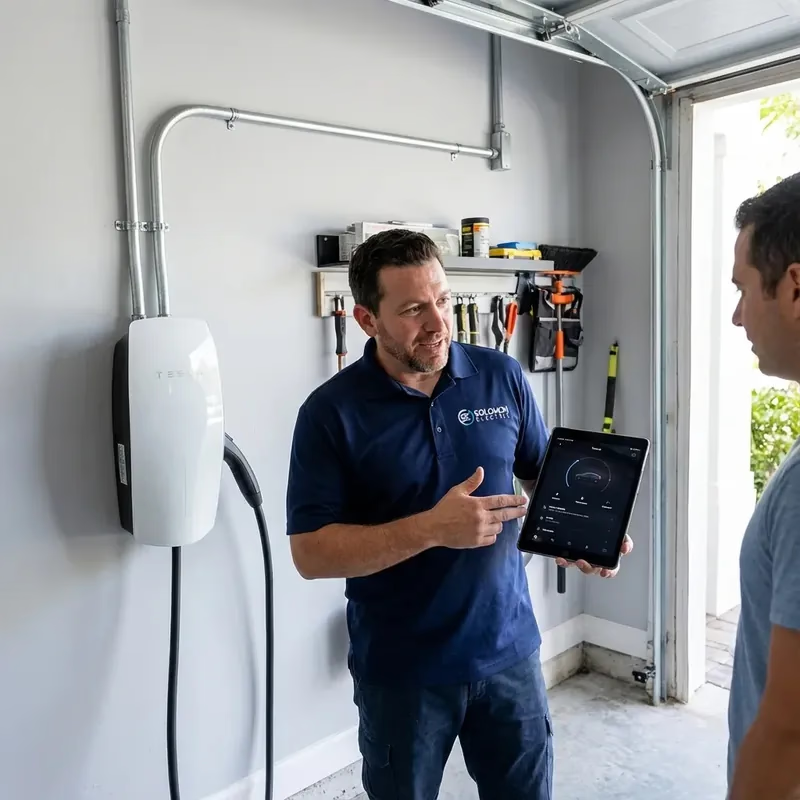
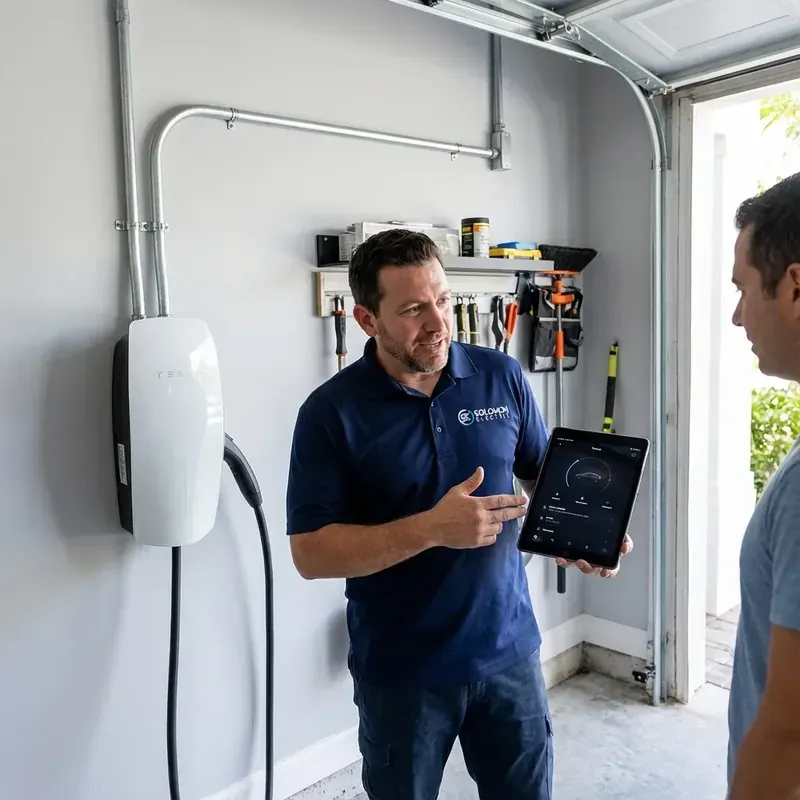
EV chargers come in two installation configurations: hardwired (permanently connected to the circuit) and plug-in (connected via a NEMA 14-50 or 6-50 outlet). Each has advantages depending on your situation.
Hardwired chargers are permanently mounted and wired directly into your electrical system. They typically support higher amperage (up to 60 amps for 48-amp continuous charging), look cleaner with no visible cord or outlet, and are the preferred option for permanent installations. The downside: if you move, you leave the charger behind or need an electrician to disconnect it.
Plug-in chargers connect to a NEMA 14-50 outlet — the same type used by most electric ranges and RVs. The advantage is portability: you can take the charger with you if you move, and the outlet serves as a versatile 240-volt connection for other purposes. The limitation is that most plug-in chargers are capped at 40 amps (32-amp continuous draw) due to the NEMA 14-50 outlet's rating.
For most homeowners planning to stay in their home long-term, we recommend a hardwired installation with a 60-amp circuit. This provides maximum charging speed and a clean, professional appearance. For renters or those planning to move within a few years, a NEMA 14-50 outlet provides flexibility.