Moving Beyond the 120V Wall Outlet
Ready for home EV charging? Solomon Electric is your trusted Level 2 EV charger installer in South Florida. We handle panel upgrades, dedicated circuit installation, and charger mounting for Tesla, Ford, Rivian, and all EV brands. Serving Miami and beyond. Get a free quote →
Purchasing an Electric Vehicle (EV) transforms how you think about “fueling.” However, the realization quickly sets in that the standard Level 1 trickle charger provided with the vehicle is drastically insufficient. Adding a mere 3-4 miles of range per hour means a weekend road trip recovery could take until Wednesday.
Upgrading to a Home EV Charging System (Level 2) is the singular key to an effortless, overnight charging experience. But high-voltage, continuous electrical loads require strict engineering oversight to prevent panel overheating and electrical fires.
Hardwired Chargers vs. NEMA 14-50 Outlets
When moving to 240V Level 2 charging, homeowners face a critical decision: Should the charger be permanently hardwired, or should it plug into a heavy-duty NEMA 14-50 receptacle?
The NEMA 14-50 Outlet Route
Traditionally popular because it allows for charger portability.
- Limitations: National Electrical Code (NEC) limits continuous loads to 80% circuit capacity. A 50-amp outlet can safely push a maximum of 40 amps to the car.
- Code Requirements: Recent NEC updates require all 240V garage outlets to utilize a GFCI breaker. EV chargers already have internal GFCI protection. When dual GFCI systems interact, “nuisance tripping” is incredibly common, leaving you with an uncharged car in the morning.
The Hardwired Route (Recommended)
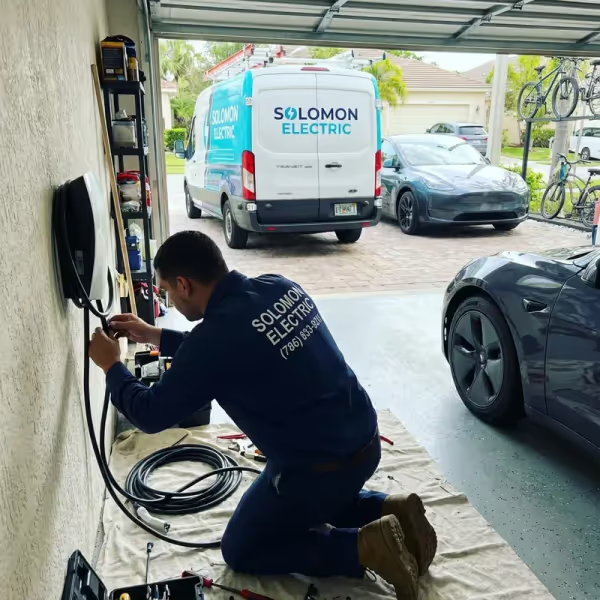
We strongly advocate for hardwiring EV Charging units directly to the panel.
- Performance: Hardwired systems can be placed on 60-amp circuits, safely delivering 48 amps of continuous power to vehicles like Tesla, Rivian, and Ford Lightning, drastically reducing charging times.
- Safety & Reliability: Hardwiring eliminates the physical plug and receptacle (the weakest link where heat generation and melting typically occur during 10-hour continuous charging sessions). Furthermore, hardwired units are exempt from the nuisance-tripping GFCI breaker requirement.
The Panel Capacity Challenge
EV charging is categorized as a continuous load (drawing maximum power for 3+ hours). The vast majority of older South Florida homes built with 100-amp or 150-amp panels physically lack the mathematical capacity to add a massive 60-amp continuous circuit without risking a catastrophic main breaker overload.
Solution 1: The Panel Upgrade
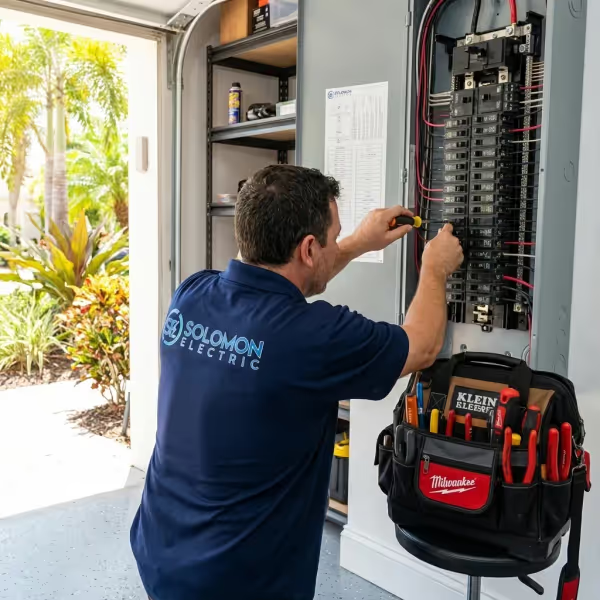
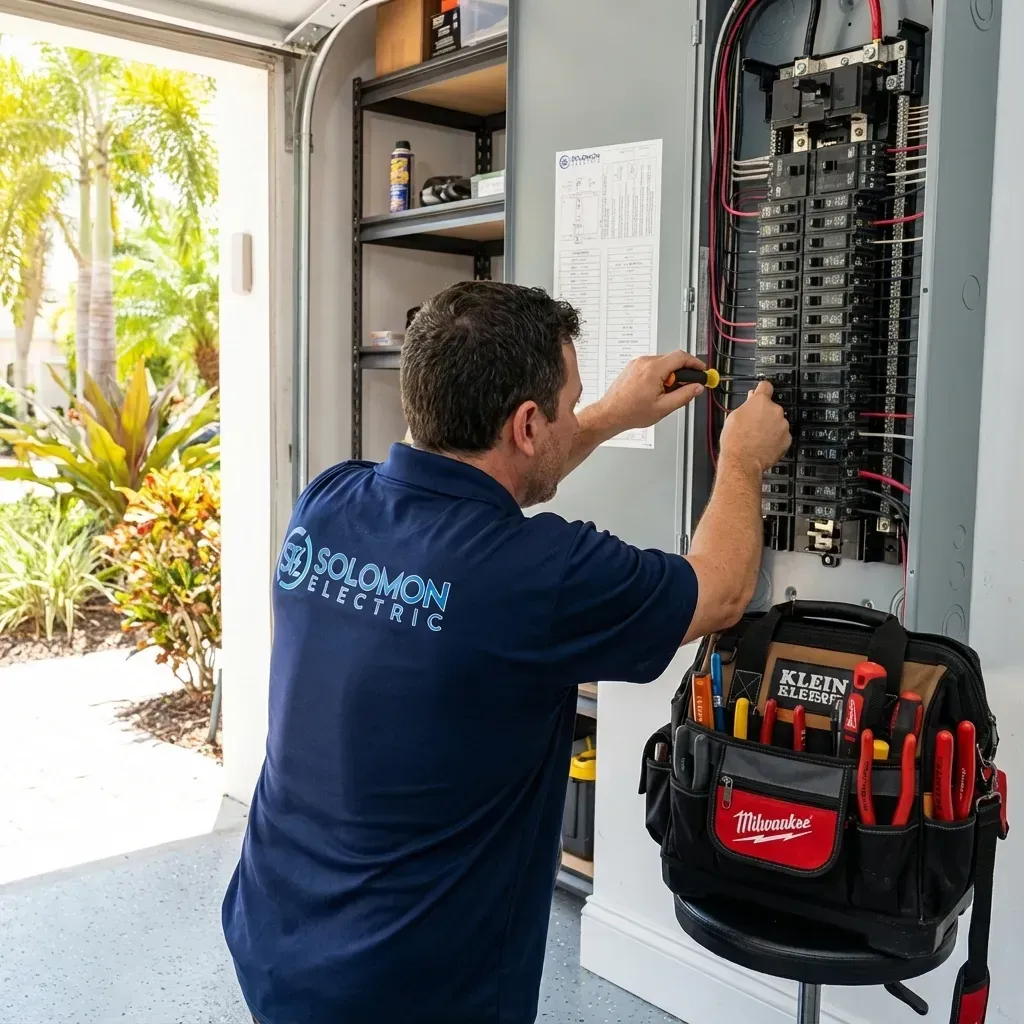
If your panel is aging, overcrowded, or structurally compromised by South Florida humidity, the safest path forward is a Comprehensive Service Panel Upgrade. We elevate your service to 200 amps, providing abundant capacity for the EV, a future pool heater, and more.
Solution 2: Smart Load Management
If a panel upgrade is cost-prohibitive or physically impossible (e.g., in condominium complexes), Solomon Electric utilizes Smart EV Load Management Controllers (like the DCC-9 or Neurio). These brilliant devices install between your panel and the EV charger to actively monitor your home’s total electrical draw in real-time. If you run your oven, dryer, and central AC simultaneously—pushing your home near its threshold—the smart controller pauses the EV charging session. Once the heavy appliances shut off, the vehicle resumes charging automatically.
Ready for High-Speed Home Charging?
We install Tesla Wall Connectors, ChargePoint, Wallbox, and more, ensuring strict NEC continuous-load compliance.
Schedule Your Installation
Protecting Your Investment
A dedicated 240V circuit represents a direct highway from the utility grid to your vehicle’s $15,000 battery pack. For this reason, Solomon Electric installs a Type 2 Surge Protection Device on the main panel alongside every EV charger installation, shielding your vehicle’s sensitive high-voltage inverters from South Florida’s notorious lightning-induced voltage spikes.
Drive electric with confidence knowing your overnight charging infrastructure is engineered for maximum speed and uncompromising safety.