Surviving South Florida’s Electrical Climate
South Florida holds the undisputed title as the lightning capital of the United States. Between intense summer thunderstorms, hurricanes, and an aging municipal power grid, your home’s electrical system is under constant assault from microscopic voltage spikes.
Most homeowners rely on $15 plastic power strips to defend $15,000 worth of electronics. This is a critical vulnerability. At Solomon Electric, our Whole-Home Surge Protection solutions provide a multi-tiered, code-compliant defense mechanism that guards your entire property from the breaker box inward.
The Reality: 80% of Surges Come from Inside
While lightning strikes generate the most catastrophic power surges, they only account for about 20% of all surge events.
The remaining 80% of power surges are generated internally by your own high-draw appliances. Every time your 5-ton central air conditioner, pool pump, or refrigerator compressor cycles on or off, it creates a brief, massive demand for electricity. This demand pulls power away from other circuits, followed immediately by a sharp voltage spike as the motor reaches operating speed.
Over months and years, these micro-surges silently degrade the microprocessors inside your televisions, computers, smart appliances, and even EV chargers, reducing their lifespan by half.
How Whole-Home Surge Protection Works
To properly defend a modern, smart-connected home, the National Electrical Code (NEC) now mandates Surge Protective Devices (SPDs) for all new dwelling unit service replacements.
Protection is achieved through a multi-tiered approach:
Tier 1: The Meter (Type 1 SPD)
Installed between the utility power lines and your home’s electrical meter, Type 1 devices offer the first line of defense against massive, externally generated surges (like nearby lightning strikes or utility grid transfers).
Tier 2: The Electrical Panel (Type 2 SPD)
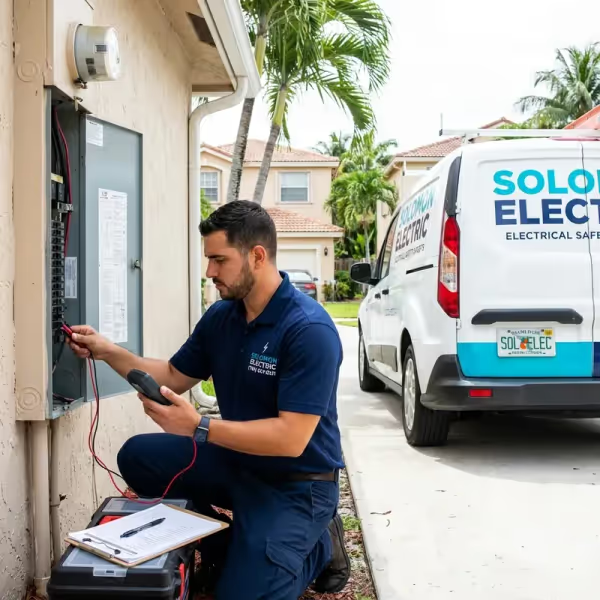
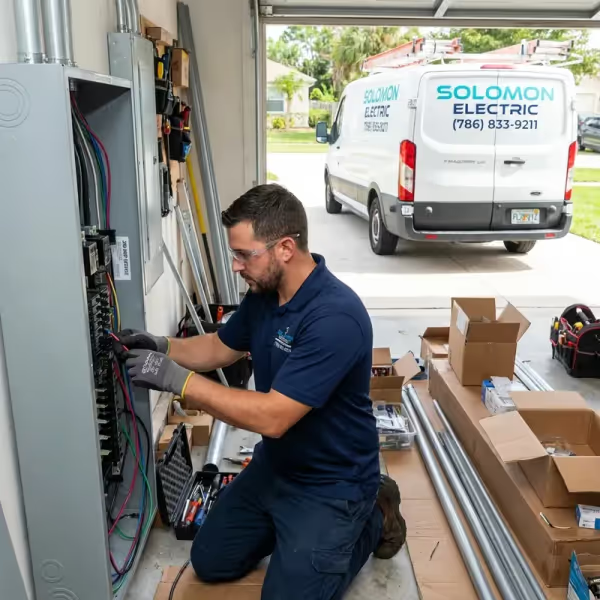
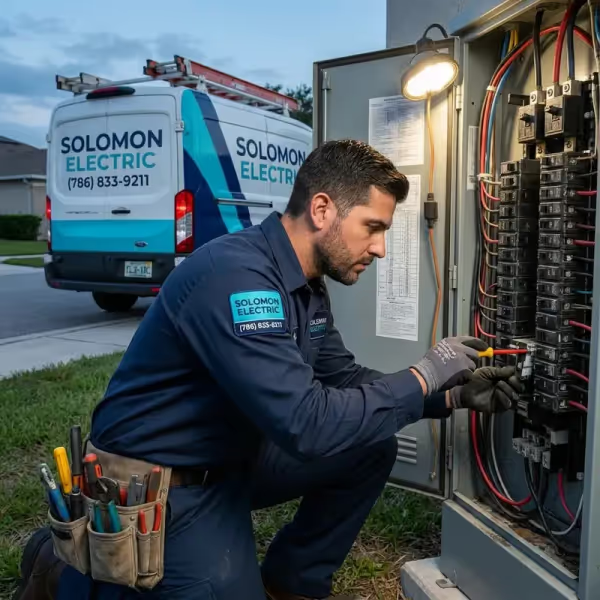
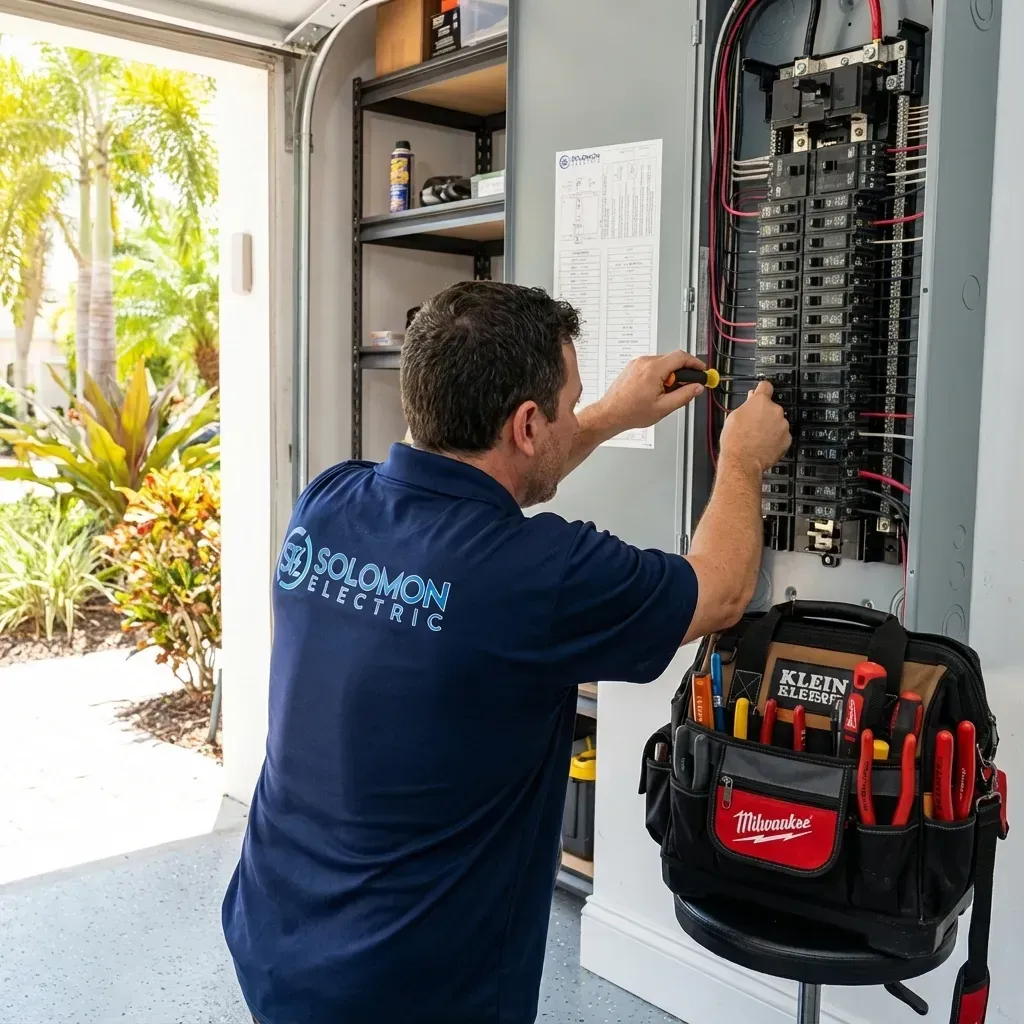
This is the most critical and cost-effective layer. A Type 2 SPD is hardwired directly into your main electrical panel or load center.
- The Mechanism: When it detects a voltage spike exceeding 120V/240V, it instantly shunts the excess electrical energy directly into the home’s grounding wire.
- The Speed: This shunting process happens in nanoseconds, effectively intercepting the surge before it can travel down the individual circuit breakers into your home.
- The Coverage: It protects everything wired to the panel, including your HVAC condenser, oven, and washer/dryer.
Tier 3: The Point of Use (Type 3 SPD)
These are the high-quality power strips you place behind your expensive living room TV or home office PC. They act as a final “mopping up” layer to catch any residual micro-voltage that sneaks past the panel protector.
Protect Your Appliances Today
Don’t wait for the next thunderstorm to fry your AC compressor.
Get a Free Surge Protection Estimate
The Economics of Surge Protection
Consider the replacement cost of the microprocessors in your home:
- Smart Refrigerator: $2,500
- Central AC Air Handler/Thermostat: $3,000
- EV Charging Station: $800
- Home Office Suite & Televisions: $4,000+
The installation of a robust, whole-house surge protector is generally a fraction of the cost of replacing even a single damaged appliance. Furthermore, many high-end Type 2 SPDs come with connected-equipment warranties that cover thousands of dollars in real-world damage if the device fails to stop a surge.
The Role of Grounding
It is critical to note that a surge protector is only as good as the ground wire it is attached to. The excess voltage must go somewhere. If your home’s grounding rods are corroded, improperly driven, or disconnected, the surge protector cannot function. This is why a professional installation always includes a comprehensive inspection of your primary grounding electrodes.
Secure your South Florida home against the invisible threat of voltage degradation. Ensure your panel is fortified for the storm season ahead.