
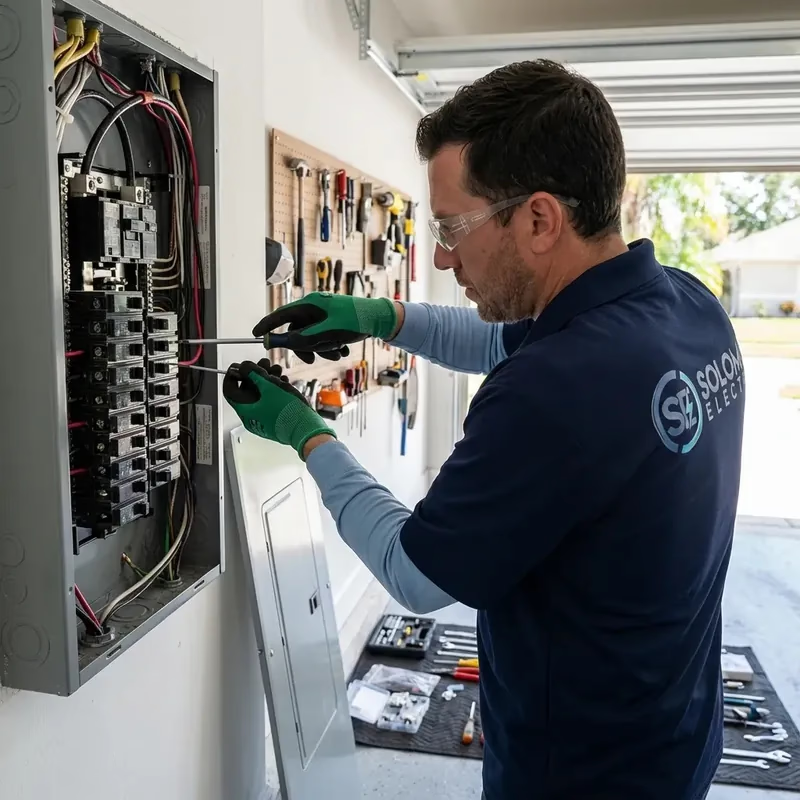
Whole-Home Surge Protection service provided by licensed electricians in South Florida

Licensed Electrician • FL #EC13012419 • 24/7 Available

Surge Protection Installation

South Florida leads the nation in lightning strikes, and each one can send thousands of volts through your wiring. Power strip surge protectors can't handle this—you need panel-level protection. South Florida experiences a high frequency of lightning activity, which poses a risk to residential electrical systems. Solomon Electric's licensed team installs comprehensive surge protection devices (SPDs) at the main electrical panel to mitigate high-voltage spikes caused by external weather events or utility grid fluctuations. Licensed FL electricians installing whole-home surge protection at the panel level throughout South Florida.

Licensed FL EC13012419
24/7 Emergency Response
BBB A+ Accredited

What is Surge Protection Installation?

Surge Protection Installation is a professional electrical service that south florida leads the nation in lightning strikes, and each one can send thousands of volts through your wiring. power strip surge protectors can't handle this—you need panel-level protection. south florida experiences a high frequency of lightning activity, which poses a risk to residential electrical systems. solomon electric's licensed team installs comprehensive surge protection devices (spds) at the main electrical panel to mitigate high-voltage spikes caused by external weather events or utility grid fluctuations. licensed fl electricians installing whole-home surge protection at the panel level throughout south florida. Our licensed electricians in Miami-Dade and Broward counties provide expert surge protection installation with guaranteed satisfaction.

Related:
electrical-panel-upgrade-100a-to-200a home-electrical-system-upgrade electrical-safety-inspection
Type 1/2 Device Rating
UL 1449 Safety Standard
SPD Equipped
NEC Compliant

Signs You May Need Whole Home Surge Protection

Properties in high-lightning regions are subject to induced voltage spikes that can affect internal wiring and connected devices. These conditions illustrate the requirement for system protection.

Atmospheric Electrical Discharge

Frequent lightning activity in Florida induces secondary voltage spikes in residential wiring that can affect the performance of electronics and appliances.

HVAC Control Board Sensitivity

The integrated circuits and inverter boards in modern air conditioning systems are susceptible to damage from even minor electrical surges.

Microprocessor Degradation

Smart home hubs and computer hardware utilize sensitive processors that can experience cumulative damage from repeating micro-surges in the utility grid.

Outlet-Level Protection Limitations

Standard point-of-use surge strips provide limited protection and do not address hardwired appliances or the structural wiring of the home.

Peripheral Device Vulnerability

Equipment such as EV chargers and pool pumps connected directly to the home's electrical panel are exposed to surges entering through the main service entrance.

Property Insurance Considerations

Electrical surge damage is a common cause for homeowners' insurance inquiries, and many policies require mitigation steps to maintain coverage.

How Our Whole Home Surge Protection Process Works

1

Grounding System Evaluation

A technician tests the property's ground rod and bonding to verify that the system has an effective path for electrical discharge.

2

Device Integration

A high-capacity Surge Protective Device (SPD) is mounted and hardwired to the main electrical panel to monitor incoming voltage.

3

System Strategy Development

The property's electrical layout is analyzed to determine the optimal placement for secondary, point-of-use filters.

4

Safety Code Compliance

The installation is completed in accordance with the latest NEC requirements, which mandate surge protection for residential service modernizations.

5

Operational Verification

The technician confirms the device is active and provides instruction on how to monitor the visual indicators for protection status.

Why Professional Whole Home Surge Protection Matters

Comprehensive Mitigation

A single panel-mounted device provides protection for all electrical circuits, outlets, and hardwired systems within the residential structure.

Regulatory Alignment

Professional installation meets the requirements set by many Florida insurance carriers for property risk reduction.

System Stability

Mitigating grid noise and voltage fluctuations contributes to the stable operation of the entire residential electrical infrastructure.

Electrical Fire Prevention

High-energy surges can lead to arcing and thermal damage in walls; SPDs divert this energy safely to the earth grounding system.

Stopping Electronic Failure: Panel-Level Protection in South Florida

Expert electrical services are provided for the installation of surge protective devices designed to handle the high lightning frequency of the South Florida region. Professional integration at the main terminal provides a safety barrier for all internal electrical circuits. Our licensed electricians perform a complete load calculation before any panel work, ensuring your new panel meets current NEC requirements and has room for future expansion. We use copper bus bars, properly torqued connections, and AFCI/GFCI breakers where required by Florida Building Code.

The Foundation of Safety: Soil Resistance & Grounding in South Florida

The effectiveness of an SPD is dependent on the property's grounding system. Licensed electricians perform grounding resistance checks to verify that induced energy can be safely diverted into the soil as part of a total protection strategy. South Florida's heat and humidity accelerate corrosion inside electrical panels. We inspect for oxidized bus bars, loose connections, and thermal damage that compromise safety. Every panel we install includes proper weather sealing rated for coastal environments.

Protecting Your Assets from South Florida's Lightning Intensity

South Florida experiences more lightning strikes per square mile than almost anywhere in the United States. Without panel-level surge protection, every lightning event near your home sends damaging voltage spikes through your wiring—destroying TVs, computers, smart home devices, and HVAC control boards. Insurance companies increasingly require panel upgrades for policy renewals. Our electricians provide documented before-and-after reports that satisfy insurance requirements, and we coordinate directly with your insurer when needed.

Tiered Safety: Implementing the Cascading Protection Standard in South Florida

The most effective surge protection uses a cascading approach: a Type 2 SPD at the main panel blocks large utility and lightning surges, while Type 3 point-of-use protectors at sensitive equipment provide the final line of defense. Solomon Electric designs and installs complete protection systems tailored to your home. Modern electrical demands—EV chargers, home offices, pool equipment, smart home systems—require more capacity than panels installed even 15 years ago. We future-proof your installation with 20-30% additional capacity beyond your current needs.

Complete Expert Guide

The Definitive Guide to Surge Protection Installation in South Florida

Written by licensed FL electricians with 18+ years of hands-on experience

Why South Florida Homes Need Surge Protection More Than Anywhere Else

Florida is the lightning capital of the United States, with Central and South Florida experiencing an average of 70-100 thunderstorm days per year. Each lightning strike releases up to one billion volts of electricity. Even a strike a mile from your home can send a damaging surge through utility power lines, cable lines, and even underground water pipes.

But lightning is only one source of voltage surges. The more common — and often overlooked — sources are internal surges generated within your own home. Every time a large motor cycles on or off (air conditioner compressor, refrigerator, pool pump), it creates a small voltage spike that travels through your home's wiring. While each individual spike is small, the cumulative effect of thousands of these surges per year gradually degrades the sensitive electronics in modern appliances, smart home devices, and HVAC control boards.

A whole-home surge protector installed at your electrical panel provides a first line of defense against both external surges from the utility grid and internal surges from your own appliances. It works by diverting excess voltage to ground before it reaches your branch circuits and connected devices.

How Whole-Home Surge Protection Works: The Technical Reality

A whole-home surge protection device (SPD) is installed directly at your main electrical panel, typically connected to a dedicated two-pole breaker. When voltage on the incoming power lines exceeds a safe threshold — typically 120% of nominal voltage on a 120/240V system — metal oxide varistors (MOVs) inside the SPD activate in nanoseconds, creating a low-impedance path that diverts the excess energy to ground.

The key specifications to evaluate in a surge protector are: the surge current rating (measured in kA — look for 50kA or higher for South Florida), the clamping voltage (the voltage level at which the SPD activates — lower is better, typically 400V for a 120/240V system), and the response time (sub-nanosecond is ideal). The joule rating indicates how much total energy the SPD can absorb over its lifetime before the MOVs degrade — higher is better.

Critically, a whole-home SPD requires a proper grounding system to function. If your home's grounding is inadequate — corroded ground rods, loose connections, or a single ground rod instead of the NEC-required two-rod system — the SPD cannot effectively divert surge energy. A qualified electrician should evaluate your grounding system as part of any surge protector installation.

Layered Surge Protection: A Complete Strategy

No single surge protector provides complete protection. The industry best practice is a layered approach: a Type 1 or Type 2 SPD at the main panel provides your primary defense, absorbing the largest surges before they enter your home's wiring. Point-of-use surge protectors (Type 3 SPDs — the power strips with surge protection) at sensitive equipment like computers, home entertainment systems, and networking equipment provide a second layer of defense against residual surges that the panel-level SPD does not fully suppress.

For homes with particularly sensitive or expensive equipment — home theaters, medical equipment, home servers, or high-end smart home systems — we recommend adding a dedicated surge-protected circuit for those loads. This provides the cleanest possible power to your most sensitive devices.

Do not forget non-electrical entry points. Cable TV coaxial lines, telephone lines, ethernet cables, and even satellite dish cables can all carry lightning-induced surges into your home. Secondary surge protectors for these communication lines, installed where they enter the home, complete your protection strategy.

Where We Provide Surge Protection Installation

Solomon Electric provides professional surge protection installation across Miami-Dade, Broward, and Palm Beach counties. Our licensed technicians serve homeowners and businesses in Aventura, Bal Harbour, Boca Raton, Boynton Beach, Coconut Creek, Cooper City, Coral Springs, and all surrounding communities. Whether you need same-day emergency service or a scheduled consultation, our team is ready with Florida License #EC13012419 backing every project.

Common Questions

Frequently Asked Questions

Get answers to the most common questions about our electrical services and availability.

How does 'Cascading' protection work? +
Cascading involves placing a primary protector at the main electrical panel and secondary protectors at sensitive equipment outlets. This creates a multi-layered defense against high-voltage events.
Can surge protection handle a direct lightning strike? +
While direct strikes involve immense energy, a properly grounded SPD system significantly reduces the associated fire hazard and helps protecting the home's primary electrical components.
Why is protection recommended for air conditioning units? +
Modern AC units utilize electronic control boards that are highly sensitive to voltage fluctuations. Protection at the panel helps safeguard these components from induced surges.
How can one verify the status of the surge protector? +
Commercial-grade SPDs feature visual indicator lights. A change in the indicator status signifies that the device has responded to a high-voltage event and may require replacement.
Is professional installation required? +
Yes, installing a panel-mounted SPD requires access to the main service panel and must be performed by a licensed electrician to ensure proper bonding and site safety.
How long do whole-home surge protectors last? +
Quality SPDs typically last 3 to 5 years in South Florida due to the high frequency of lightning activity. Most units have indicator lights showing their protection status. We recommend annual checks and immediate replacement when the indicator shows the device has absorbed a major event.

Client Testimonials

What Our Customers Say

Don't take our word for it — read what South Florida homeowners and businesses say about working with us. These are real reviews from real customers.

Schedule Your Free Surge Protection Installation Estimate

Stop putting off your Surge Protection Installation — the longer you wait, the more it costs (and the bigger the risk). <a href="/book/">Get a free, no-pressure quote</a> from a licensed electrician who's done this thousands of times across South Florida.

All Services
Call Now