Safe integration of Portable Power
Following a severe South Florida storm, portable generators can be a lifeline—keeping refrigerators cold, internet routers online, and essential lighting active. However, integrating this power into your home’s electrical system without the proper hardware is heavily hazardous.
Improperly connected portable generators cause structural fires, electrocute homeowners, and pose lethal threats to utility linemen repairing the grid. At Solomon Electric, our Portable Generator Hookup services ensure your temporary power is deployed safely, legally, and conveniently.
The Fatal Flaw: Backfeeding
The most dangerous action a homeowner can take is taking a double-sided extension cord (a “suicide cord”) and plugging a heavy-duty portable generator directly into a dryer or range wall outlet.
This practice, known as backfeeding, powers the home’s panel but also pushes high-voltage electricity backward through the utility meter and into the municipal grid. The transformers on the street will step this voltage up to thousands of volts, sending lethal currents through power lines that utility workers believe to be dead. Backfeeding is illegal, severely dangerous, and voids homeowners’ insurance policies.
The Solution: Code-Compliant Mechanical Isolation
To safely inject portable power into your home, the National Electrical Code requires physical isolation from the utility grid. We achieve this via two primary methods:
Method 1: The Mechanical Interlock Kit
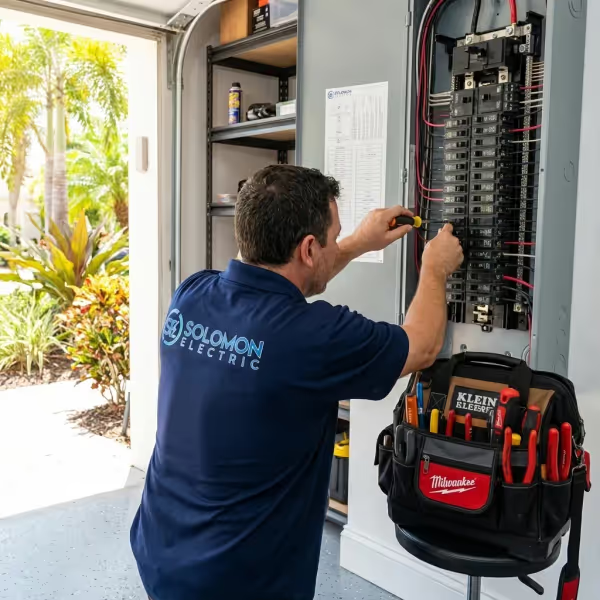
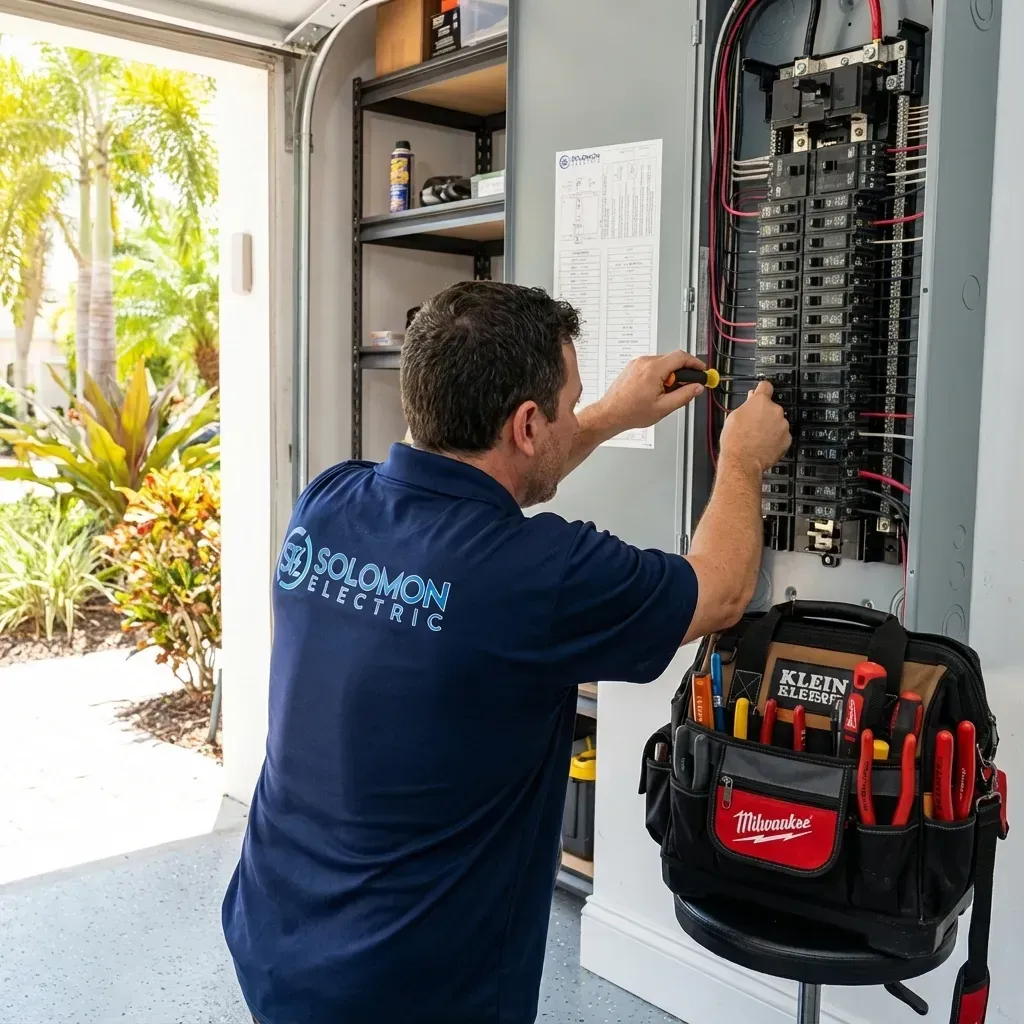
This is the most popular, cost-effective, and versatile solution. An interlock kit is a precisely machined sliding metal plate installed directly onto the cover of your existing electrical panel.
How it operates:
- You slide the metal plate upward to flip the generator breaker to the “ON” position.
- However, the plate cannot slide upward unless the Main Utility Breaker has been flipped to the “OFF” position.
- It literally becomes physically impossible for utility power and generator power to collide.
With an interlock kit, your entire panel is energized by the generator. You manually select which breakers to turn on or off, allowing you ultimate flexibility over power distribution (provided you don’t exceed the generator’s total capacity).
Method 2: The Manual Transfer Switch
A manual transfer switch acts as a secondary subpanel. During installation, critical circuits (fridge, master bedroom, living room lights) are moved out of the main panel and wired into this dedicated sub-panel.
How it operates: When the power drops, you simply flip the individual toggle switches on the transfer panel from “Line” (Utility) to “Gen” (Generator). This method restricts your backup power only to the hardwired circuits, but prevents accidental system overloads.
Need a Safe Hookup for Hurricane Season?
We install heavy-duty 30A and 50A inlet boxes and interlock kits across Miami and Broward.
Schedule Installation
The Hardware: Inlet Boxes & Cords
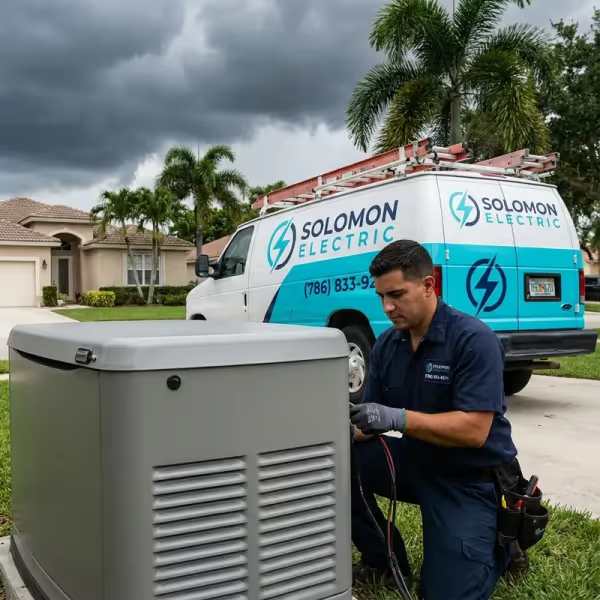
Alongside the isolation device inside your panel, the exterior of your home requires a high-capacity power inlet box.
- NEMA L14-30 Inlet (30 Amps): Supports portable generators up to ~7,500 continuous watts.
- NEMA SS2-50 or CS6375 Inlet (50 Amps): Required for heavy-duty 12,000+ watt portable generators striving to power central air conditioning.
You will connect your portable generator to this weatherproof, exterior inlet using a heavy-gauge, twist-lock cable, ensuring safe and continuous power transmission without running extension cords through cracked windows.
Operation Protocol
To safely deploy your portable system during an outage:
- Roll the generator outdoors, keeping it at least 20 feet away from any windows or doors to prevent carbon monoxide intrusion.
- Connect the heavy-duty twist-lock cable from the generator to the wall inlet.
- Turn off all heavy-load breakers in your home panel.
- Start the portable generator and let it stabilize for 60 seconds.
- Engage the interlock kit or transfer switch.
- Slowly turn on individual breakers, beginning with your most critical loads.
Professional hookups provide total peace of mind. Invest in the hardware today so you aren’t left struggling with extension cords in the dark tomorrow.