What a 4-Point Inspection Actually Checks
A 4-point inspection is the short report Florida insurers ask for before they write or renew a policy on an older home, usually anything 20 to 30 years old or more. It covers four systems: roof, plumbing, HVAC and electrical. It is not a full home inspection. The inspector is not grading how nice the house is; they are looking for the handful of things that cause claims.
Failed the electrical part? Solomon Electric fixes exactly what the report flags, pulls the permit, and gives you the documentation your carrier wants. See our electrical safety inspection and panel upgrade services for Miami-Dade and Broward.
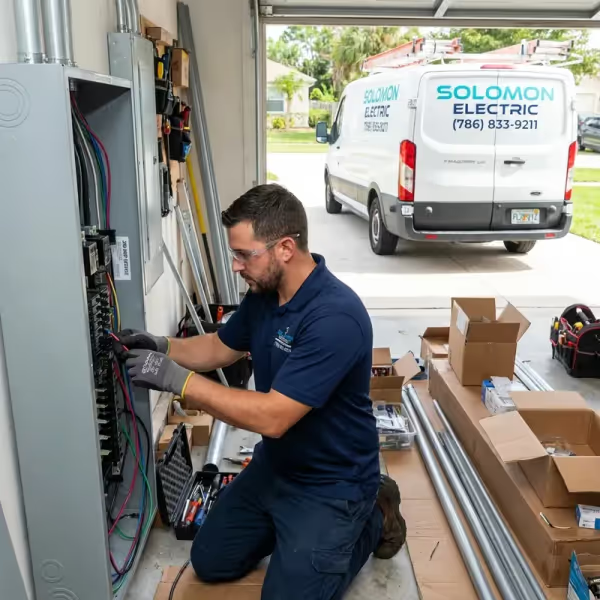
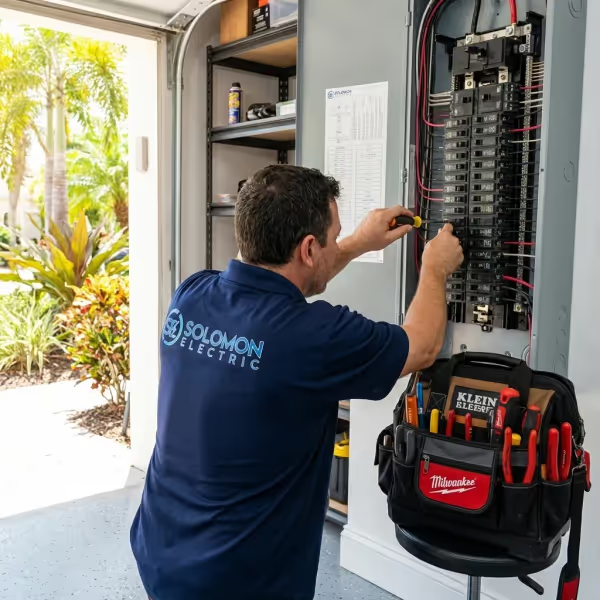
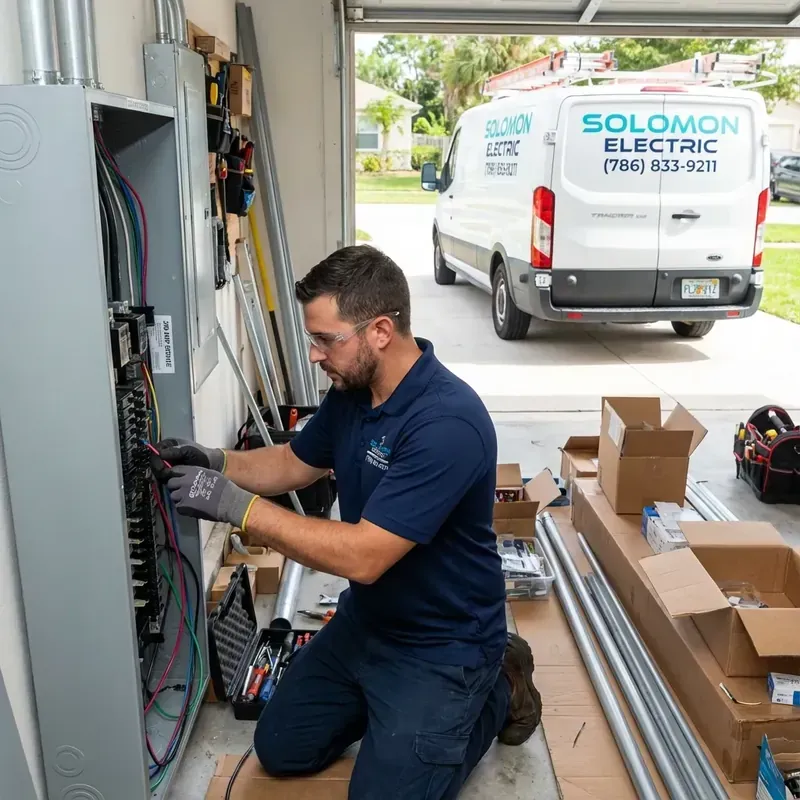
On the electrical side the inspector will photograph your panel with the cover off, note the brand and main breaker size, and look at the wiring they can see. That is the whole electrical portion, and it is where most South Florida homes built before 1990 run into trouble.
The Electrical Items on the Form
Most Florida carriers use a version of the same form. For electrical, it asks about:
- Panel brand and type. Certain brands are flagged by name because of a documented history of breakers failing to trip.
- Service size. Main breaker amperage. Many carriers want 100 amps or more; a 60-amp fuse box is a common fail.
- Wiring type. Copper is fine. Aluminum branch wiring, knob-and-tube and cloth-covered wiring are all flagged.
- Visible hazards. Double-tapped breakers, scorching or corrosion in the panel, open junction boxes, missing cover plates, exposed splices, improper breakers in the panel.
- Age and condition. Whether the system looks maintained and whether any updates were permitted.
If the inspector marks anything as unsatisfactory, the carrier will usually ask for the repair to be completed by a licensed electrician, with photos and sometimes a permit, before the policy is issued.
Panels That Fail Almost Automatically
| Panel brand | Why it is flagged | What insurers usually require |
|---|---|---|
| Federal Pacific Electric (Stab-Lok) | Breakers documented to fail to trip under overload; bus bar design issues | Full panel replacement |
| Zinsco / GTE-Sylvania | Breakers can fuse to the bus bar and stay live; aluminum bus corrodes | Full panel replacement |
| Challenger (certain models) | Overheating at the bus connection; recalls on some breakers | Replacement or documented evaluation |
| Pushmatic / Bulldog | Age, no main breaker on many units, parts unavailable | Often replacement |
| Fuse boxes (any brand) | Usually 60 amps, no modern protection | Replacement with a breaker panel, 100A or more |
Hollywood, Hallandale Beach, Miramar and the older parts of Miami have a lot of 1960s to 1980s housing stock, and that is exactly the period when Federal Pacific and Zinsco panels were installed by the thousands. If your panel cover says FPE, Stab-Lok, Zinsco or Sylvania, plan on replacing it before the inspection rather than after. It will fail, and you will lose two to four weeks waiting on the re-inspection.
Aluminum Branch Wiring
Homes wired between roughly 1965 and 1973 often have solid aluminum wire on the 15- and 20-amp circuits. It is not illegal, and it does not have to be ripped out, but most carriers will not insure it as-is. There are two accepted fixes:
- COPALUM crimp or AlumiConn connectors at every outlet, switch and junction box. The aluminum stays in the wall; the connection points, which are where the fires start, are made safe. This is the usual route.
- Full rewire to copper. Right answer if the house is being renovated anyway or the wiring has other problems.
Ask the inspector which one your carrier accepts before you spend the money. Some will take connectors with a licensed electrician's letter; a few insist on a rewire.
What the Common Fixes Cost in South Florida
These are typical ranges we see on insurance-driven jobs in Miami-Dade and Broward. Every house is different, and the written estimate is what counts, but this is enough to budget:
- Panel replacement, same amperage (FPE, Zinsco, Challenger swap): roughly $1,800 to $3,200 including permit and inspection.
- Panel upgrade from 100A to 200A: roughly $2,500 to $5,500 depending on the meter, service wire and whether FPL has to be involved. Our panel upgrade cost guide breaks this down line by line.
- Aluminum wiring remediation with AlumiConn or COPALUM: priced per connection; a typical three-bedroom home lands somewhere between $1,500 and $4,000.
- Double taps, missing GFCI protection, open boxes, cover plates: usually a half-day service call, a few hundred dollars total.
- Grounding and bonding corrections: $300 to $900 depending on what is missing.
Everything above needs a permit except the small cosmetic items. A repair done without a permit will not satisfy the carrier, and in Miami-Dade and Broward it will show up when you sell the house. We handle the permit and the county inspection as part of the job.
How to Pass the First Time
- Pull the panel cover (or have us do it) and read the label before the inspector shows up. If it is one of the brands above, replace it first.
- Make sure the main breaker is labeled and the panel directory is filled in.
- Fix the obvious: missing cover plates, open junction boxes in the attic or garage, extension cords used as permanent wiring, breakers that do not match the panel brand.
- Add GFCI protection in kitchens, bathrooms, garage and outdoors. It is cheap and inspectors notice it.
- Keep the permit paperwork from any previous electrical work. A permitted panel from 2015 with the sticker on it ends the conversation.
What Solomon Electric Does for Insurance Inspections
We get called at two points: before the inspection, to look at the panel and tell you honestly whether it will pass, and after a failed report, to fix what is listed. Either way you get a written, flat-rate estimate, a permitted repair, and the photos and letter your carrier asks for. Licensed and insured, Florida EC13012419, serving Hollywood, Fort Lauderdale, Miami, Aventura, Pembroke Pines, Davie and the surrounding cities.
Get a pre-inspection panel check